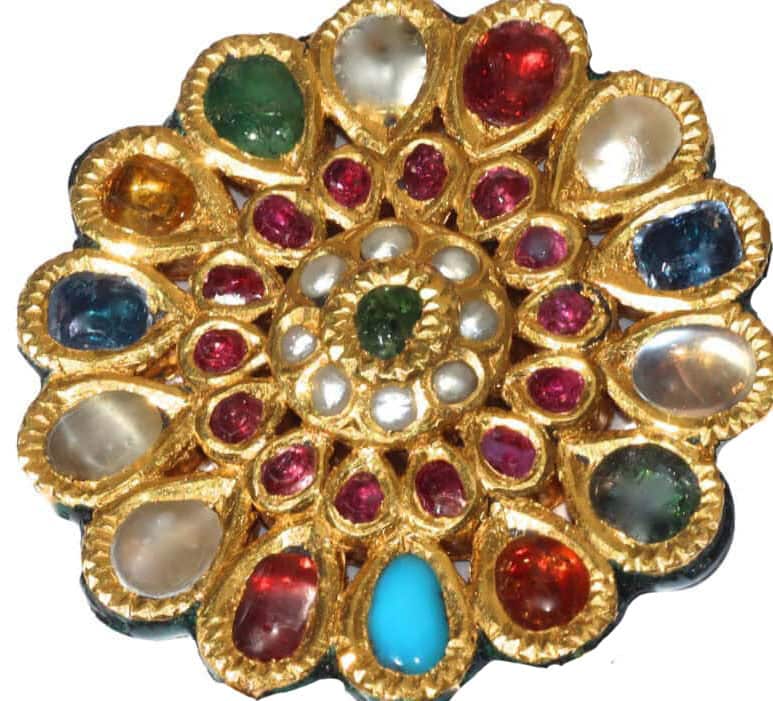
Navratna pendant
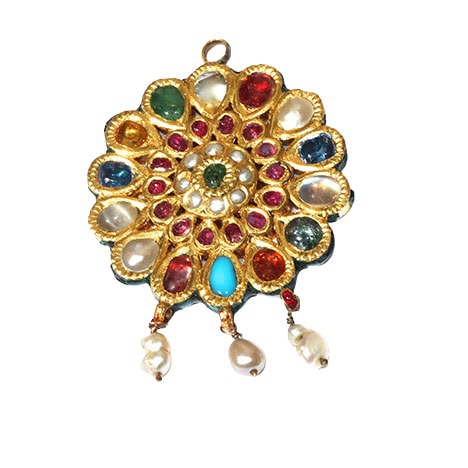
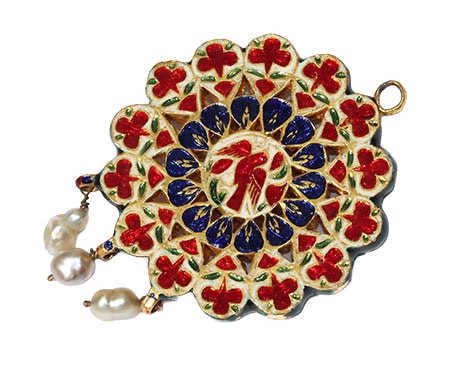
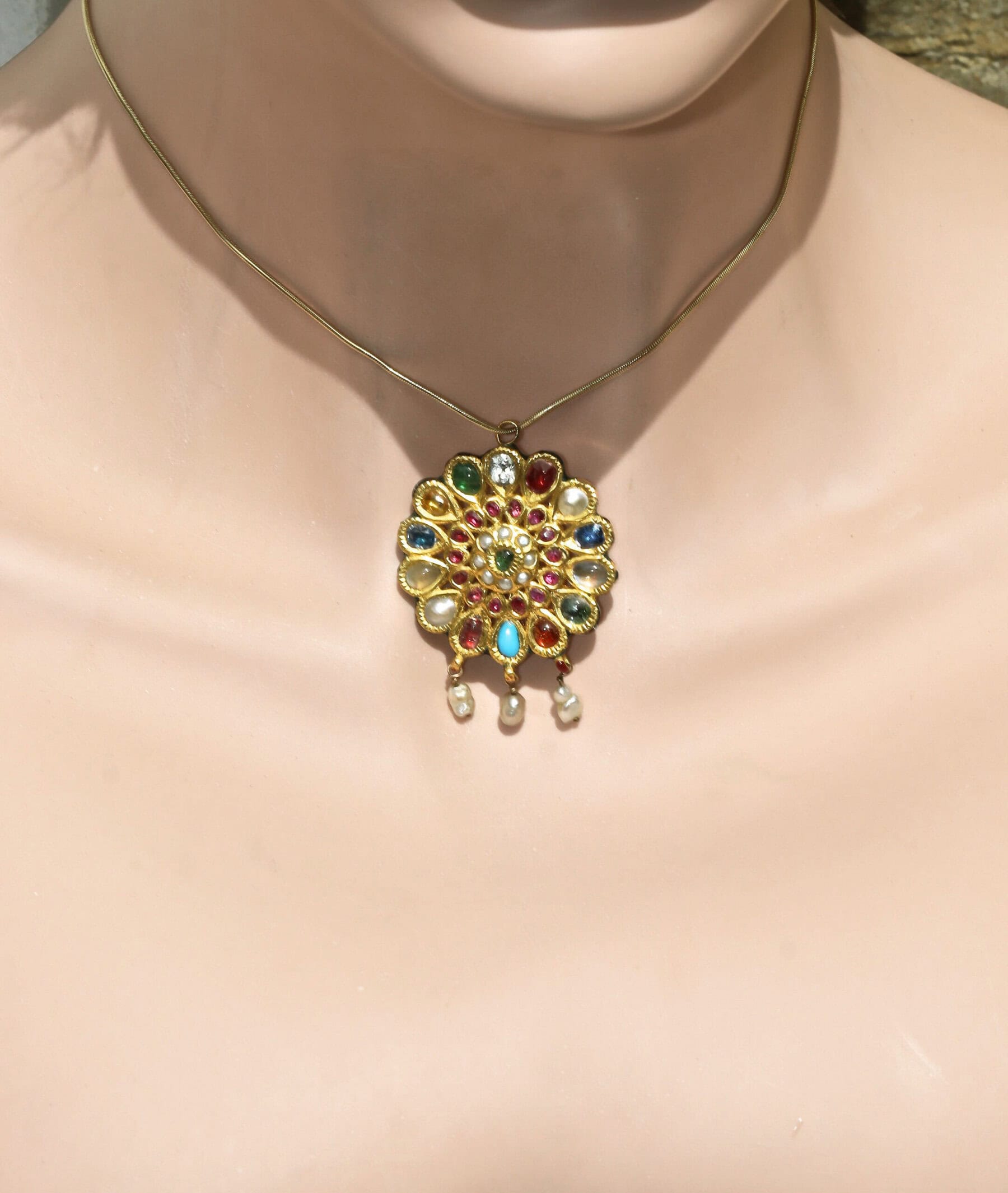
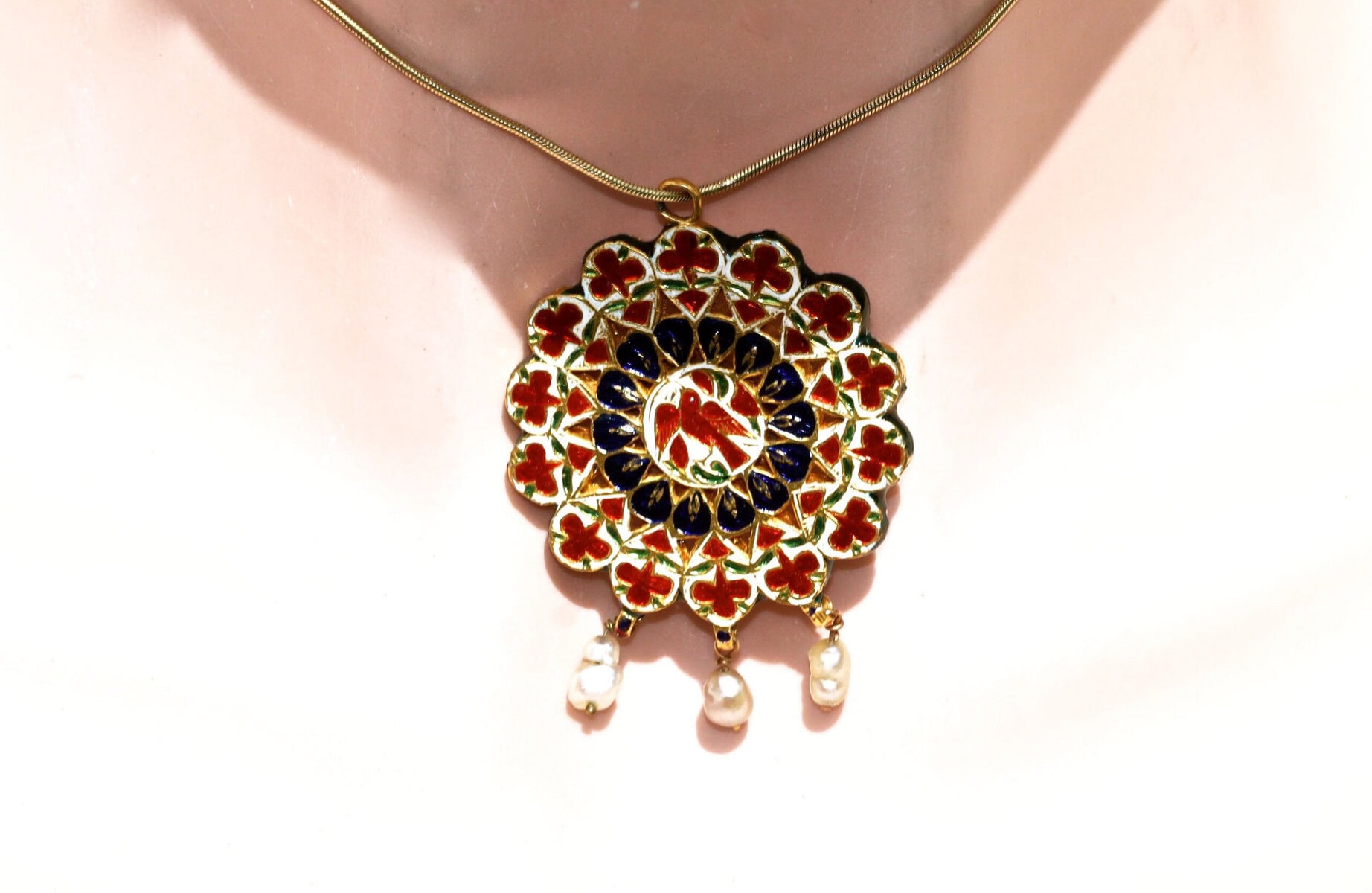
Talismanic and astrological attributions of gems have a deep history in the Indian subcontinent and precious gems were related to the planets of the astrological system. Jewellery in this style was seen as a symbol of wealth and status, and was claimed to yield talismanic benefits for health and wellbeing. On this vintage [20th century] very high carat gold pendant, the gems utilised, clockwise from the top are : topaz, spinel, natural pearl, sapphire, moonstone, aquamarine, garnet, turquoise, sapphire, natural pearl, moonstone, sapphire, topaz, emerald. The inner circle is Burma ruby and the centre is an emerald. The gold is worked in the Kundan method. Introduced to the royal courts of India in the 16th century via Persia, the combination of Kundan (gem-setting) and Meenakari (enamelling) quickly became a hallmark of regal jewels. First of all a gold frame was created, leaving intentional gaps around the shapes of the unevenly cut gems. The gemstones were foiled and set without the use of claws or prongs. The reverse features intricate Meenakari (enamelling) of a bird and floral motifs. A red enamel bird on an Indian jewel symbolises love, passion, and divine devotion, often serving as a talismanic protector. In Indian jewellery, the colour red embodies deep passion and energy, while the bird represents freedom. The pendant is 2 inches long including natural pearl drops and 1 and 1/4 inches wide. Substantial and immaculate.
sold
Item ref : VG3