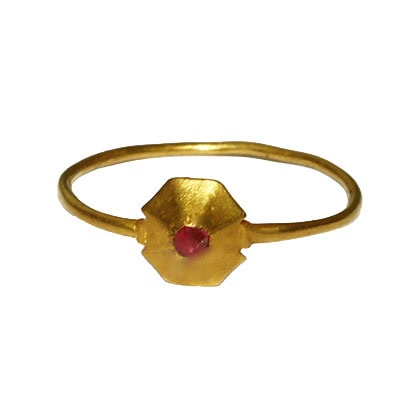
Medieval ruby tart mold ring
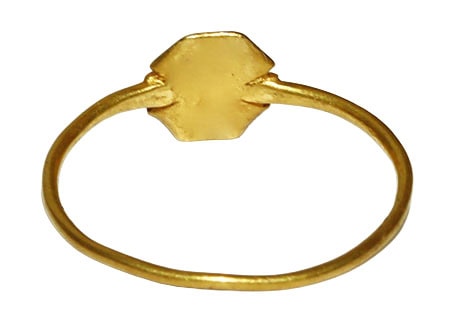
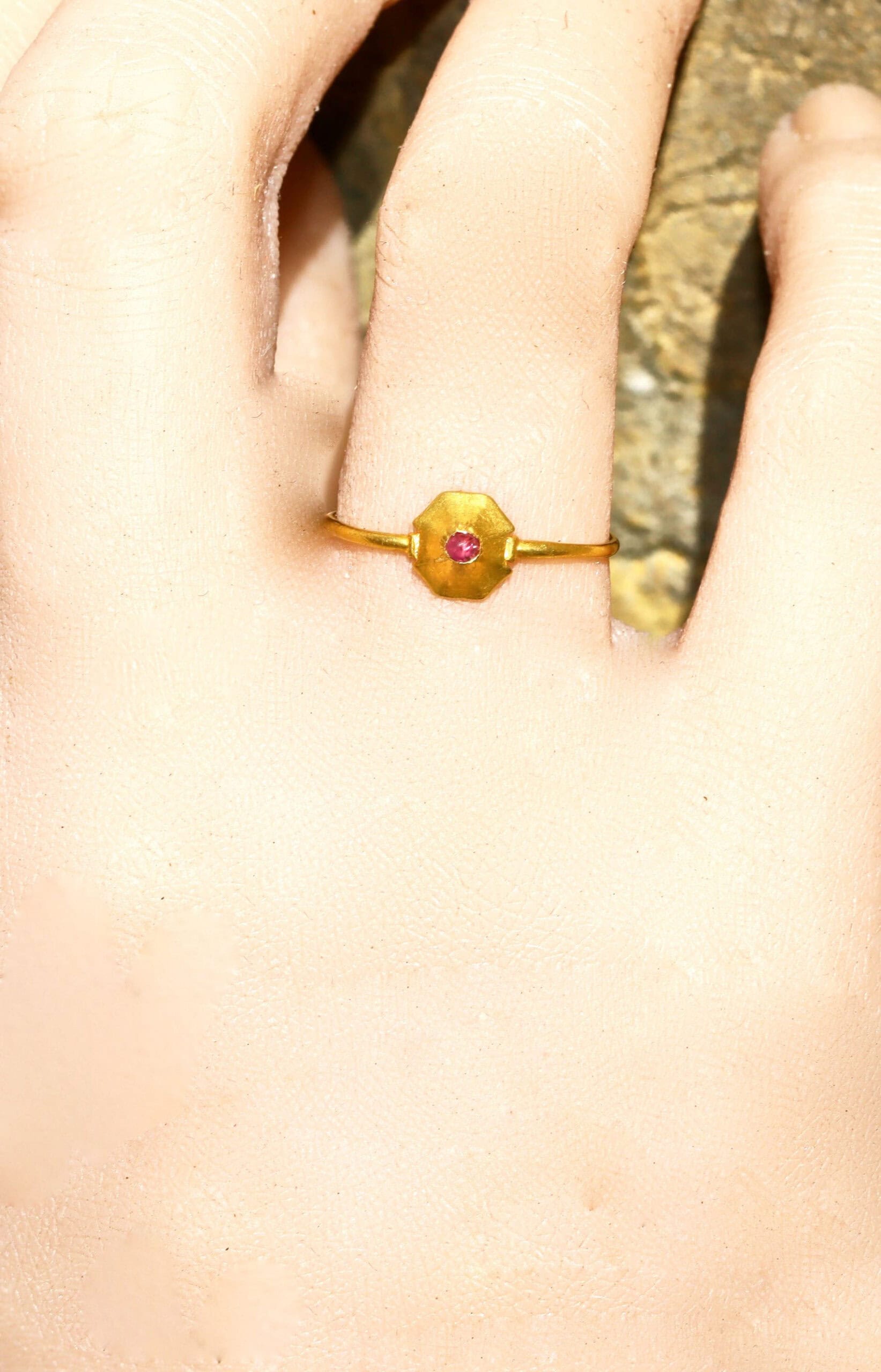
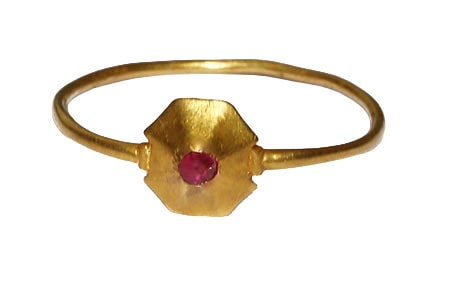
A high carat gold ring, circa 1300, set with a cabochon ruby. It is the tart mold form, also known as ‘pie-dish’ or ‘moule à tarte’. This refers to a specific style of finger ring popular in Western Europe from the 12th to the 14th centuries. Medieval lapidaries, or collections of writings on precious stones, not only described the physical properties of gems, but also ascribed to them magical powers and intrinsic virtues. Often relying on Roman and Greek sources, these lapidaries proclaimed that the ruby could promote health, dispel bad thoughts and serve as a defence against poison. This tart mold ring is size L [US 5 and 1/2] and in fine and wearable condition.
sold
Item ref : GW5