
18th century Portuguese Order of Santiago
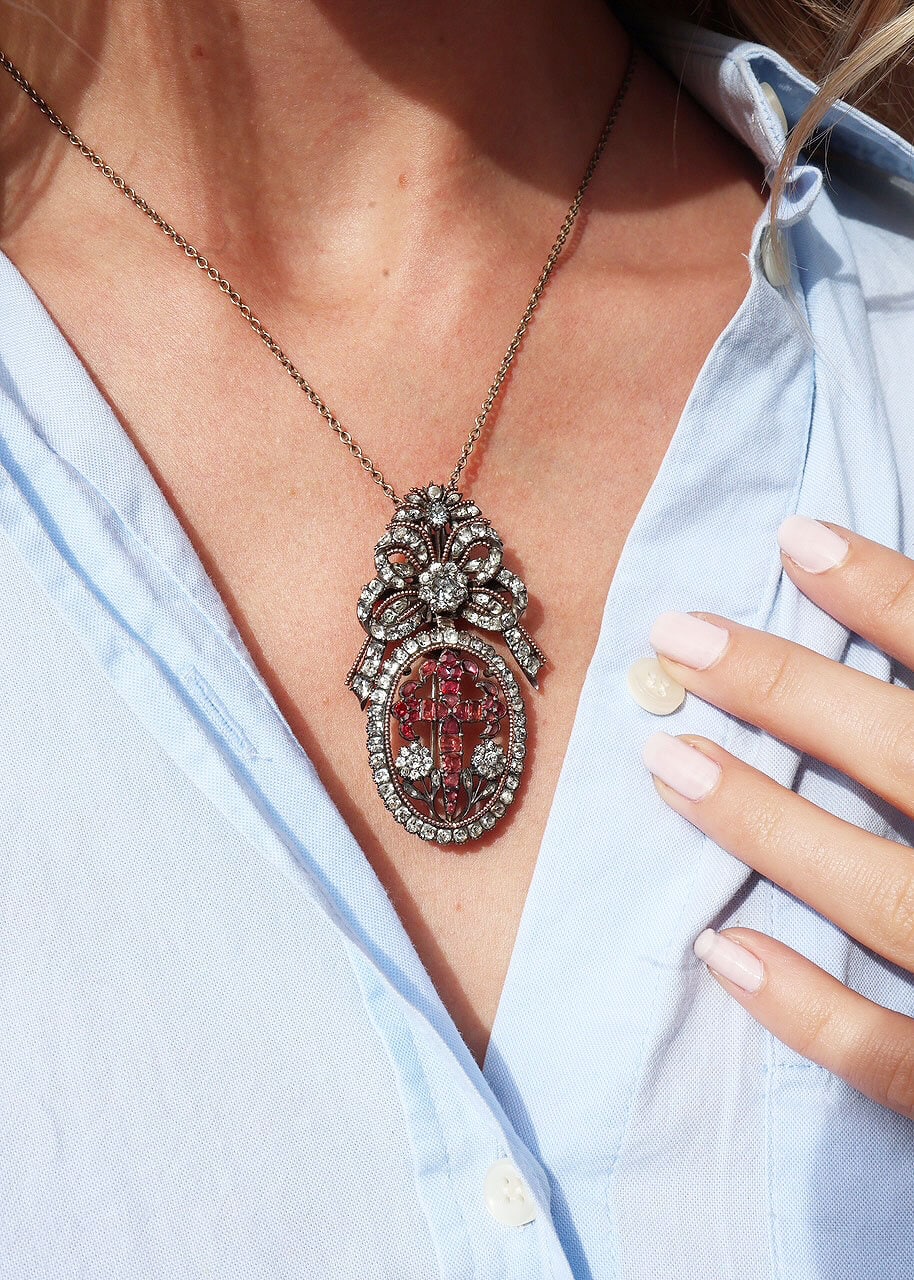
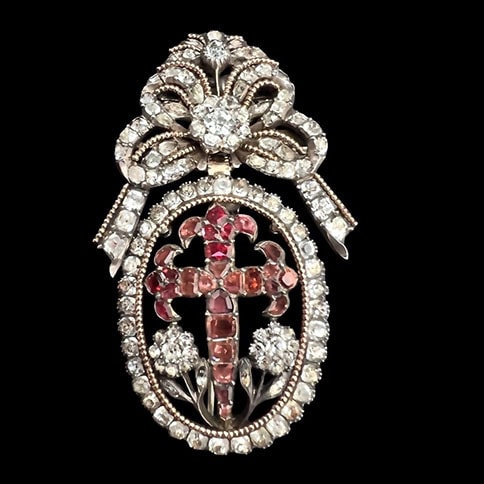
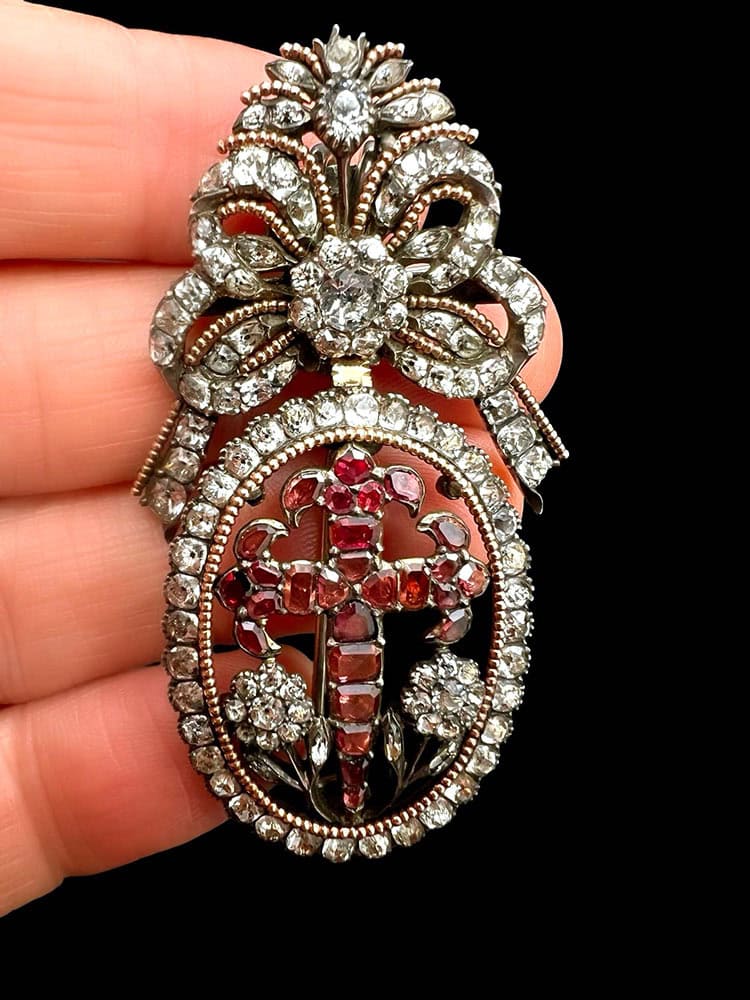
A Portuguese pendant circa 1760 – 1780, a prestigious and honorary Order of St. James of Santiago. The order was founded in 1172 and its initial function was to escort pilgrims to the shrine of St. James in Santiago de Compostela. During the Age of Discovery members of the order were involved in maritime discoveries and the expansion of the Portuguese Empire, including such notaries as Vasco do Gama and Afonso de Albuquerque. As a reward for their services, members of the order were given land, titles and privileges. During the 18th century the focus of the order shifted to charitable and cultural activities. At this time depictions of the order were transformed into highly decorative jewels reflecting the taste and fashion of the period. 18th century Portuguese jewels were lavishly opulent, with an abundance of colourful gems. This example is silver, with the sword of St. James fashioned from garnets with topaz fleur-de-lis and suspended from a decorative bow-ribbon top. The pendant is densely set with colourless topaz in foiled and closed back settings, with the gold beadwork detail typical of 18th century Portuguese jewels. It is of a particularly neat and wearable size measuring 2 and 1/8 inches by 3/4 of an inch. There are similar examples in the National Museum of Ancient Art, Lisbon. Typical 18th century Portuguese design with colourful gems, fine settings and in immaculate condition.
£5500
Item ref : DS3

Below, a gentleman wearing an Order of Santiago, Prado Museum
