
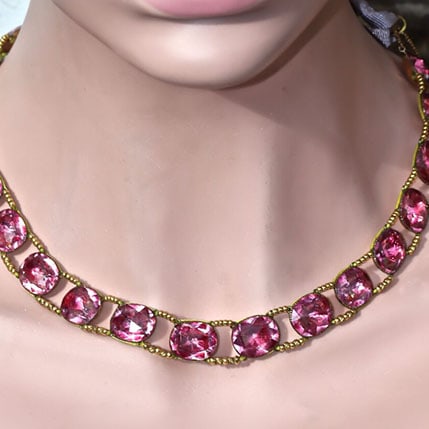
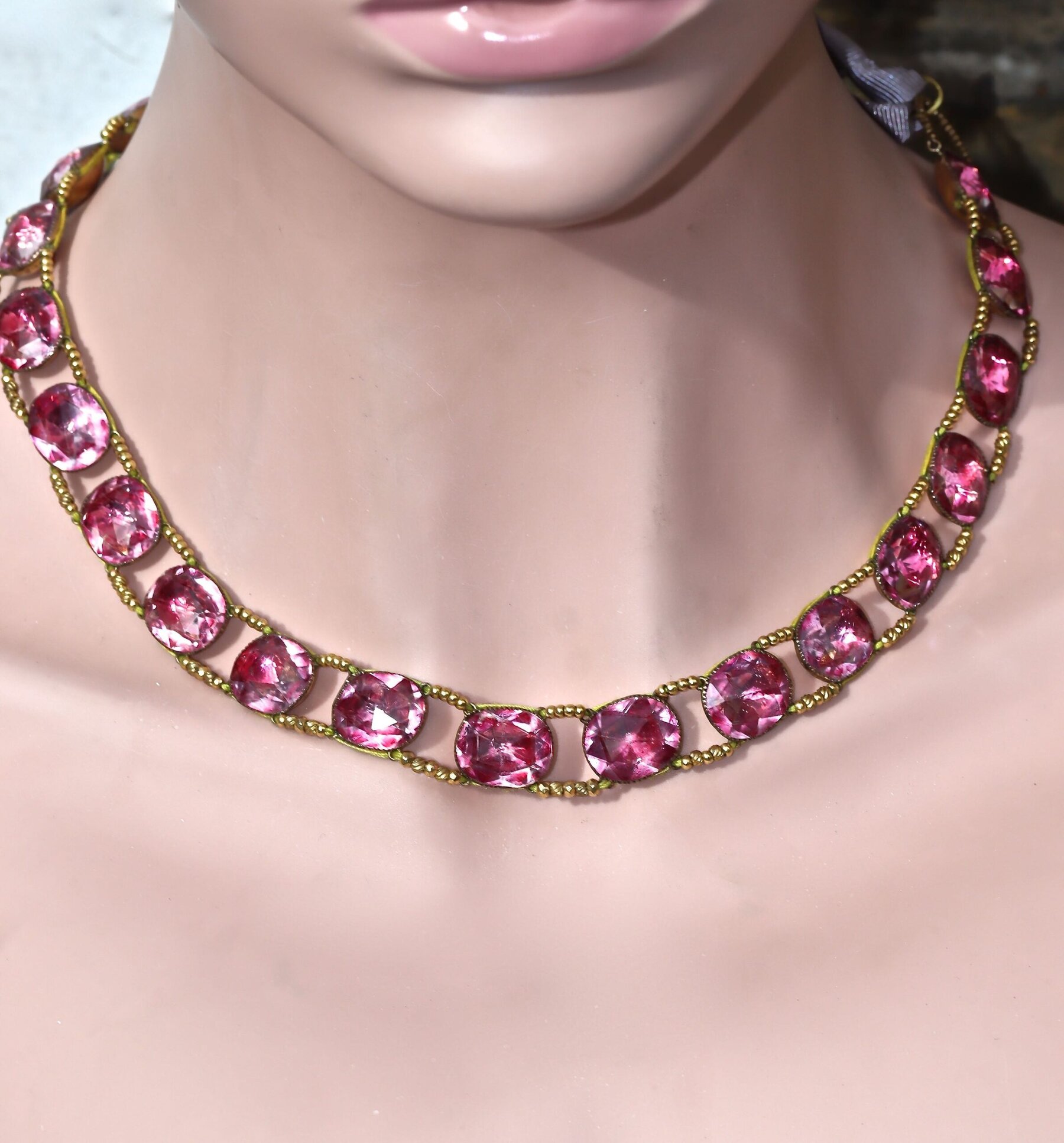
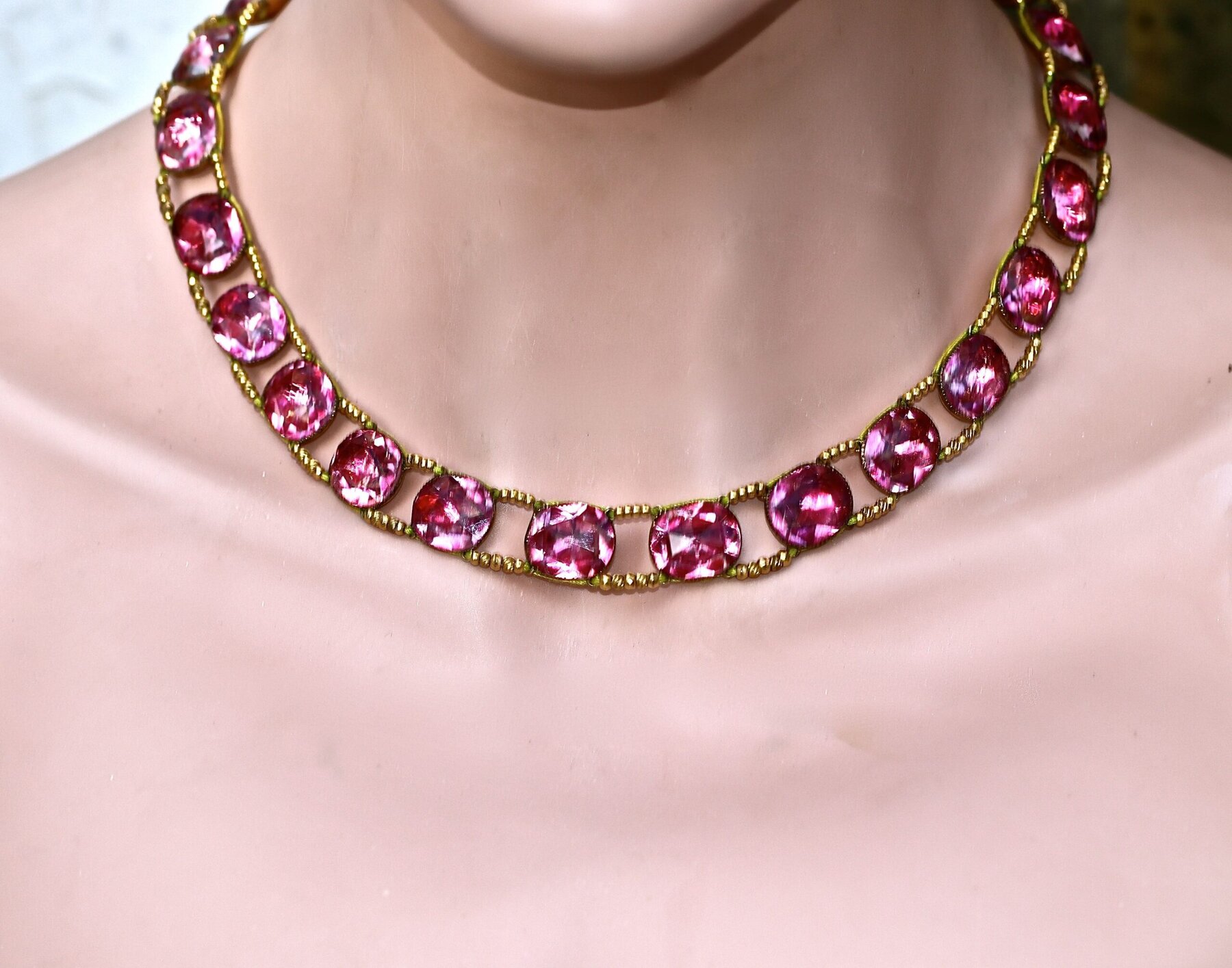
Queen Anne magenta pink necklace
A ‘Queen Anne’ paste necklace, circa 1760, front cover illustration of the iconic publication Georgian Jewellery. It is gilt metal and set with dazzling magenta pink paste which has been foiled to catch and reflect light. Two technical developments in the late 17th and early 18th centuries led to the creation of luscious paste jewels. Around 1675 George Ravenscroft developed English lead flint glass with a brilliant lustre which was perfect for paste jewels. By 1730 G.F. Stras had become famous for his paste jewellery and was appointed Jeweller to the King of France in 1734. Not only did Stras make and sell fine diamond and paste jewellery, he also dealt in accessories such as foils and powders. His 1735 trade card states : he possesses in the utmost perfection the secret of making white sheets well , as well as those of all other colours. Paints all kinds of stones very advantageously equal to those of the Orient. Here you have the perfect example of the techniques developed by Ravenscroft and Stras : lead flint paste with a brilliant lustre set over vibrant magenta pink foil. The necklace is illustrated on the front cover of Georgian Jewellery and again on page 77 of the book. It is 14 inches long and 2/3 of an inch wide. As it has ribbon fittings it will fit a neck of any size. Utterly gorgeous thing.
The necklace will be accompanied by a copy of the Georgian Jewellery book with a signed dedication by its co-author Olivia Collings.
sold
Item ref : 0308

Stras’s trade card below
