
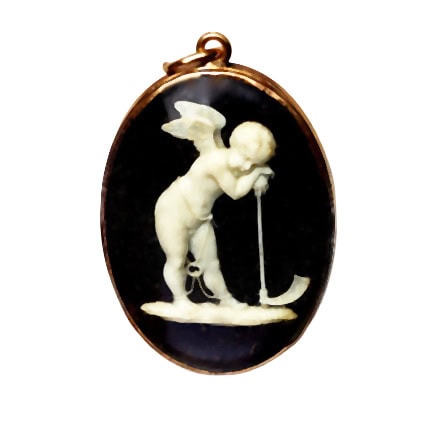
The punishment of Cupid by Giuseppe Bonzanigo
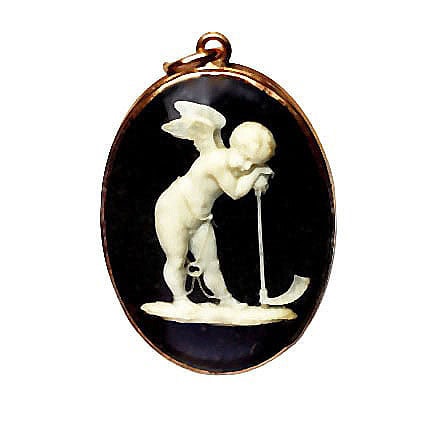
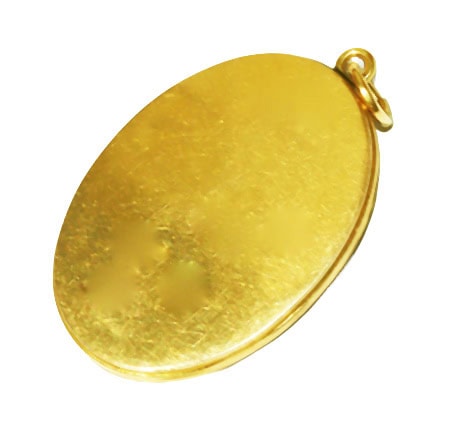
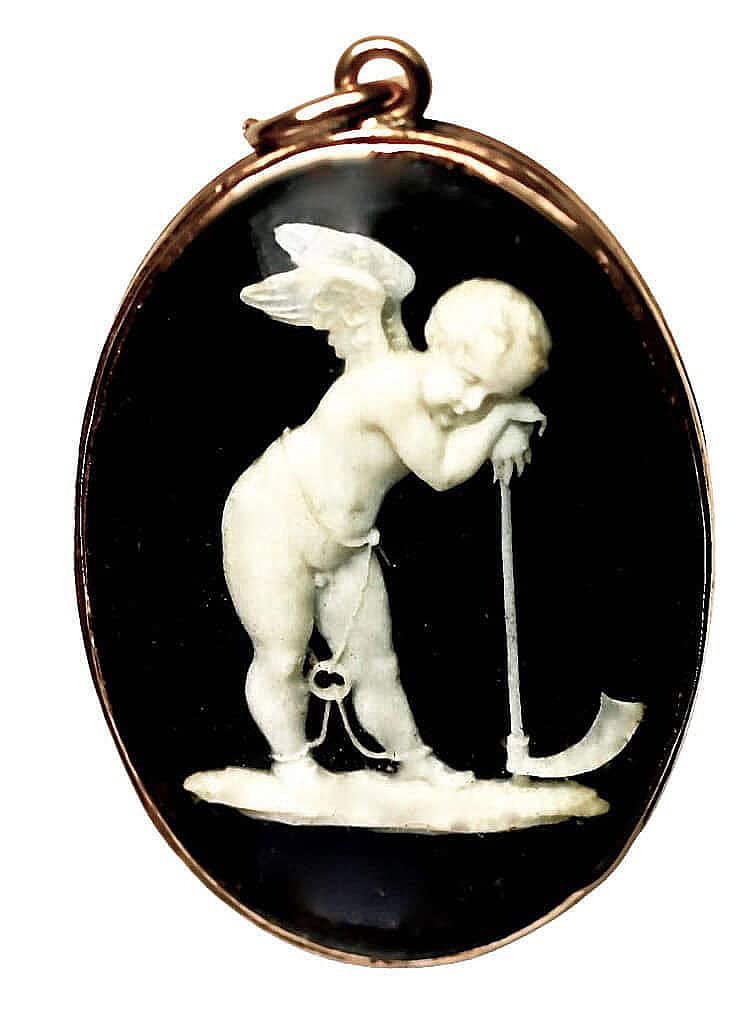
A gold pendant circa 1800, enclosing a micro-ivory carving of the punishment of Cupid, on a black ground and under crystal. Such carvings were considered to be ‘little miracles’, as they were executed on such a microscopic scale. The challenging difficulty of creating this type of miniature artwork means examples are rare. This micro carving is by the hand of Giuseppe Maria Bonzanigo, [1745 – 1820]. Bonzanigo was royal sculptor to Victor Amadeus III. As a sculptor Bonzanigo is best remembered for his small bas-relief portraits in light wood or ivory, which evoke the cameo and wax silhouettes of the 18th century.
Here Cupid leans on his upturned bow and is chained to a rock, crying. The image of Cupid chained to a rock weeping was a powerful motif in Classical art and literature, symbolising the painful, captive and destructive aspects of love. Cupid was the tormentor in affairs of the heart. When he is chained, love is being mastered or punished. His tears symbolise the grief and remorse that love can cause. In ancient Roman frescoes discovered in Pompeii, Cupid was frequently shown being punished by his mother Venus, or by Psyche.
As the Antipater of Thessalonica wrote in an epigram in the late 1st century B.C.
Who bound your hands to the pillar in a fast knot?
Who opposed fire with fire and guile with guile?
My boy, no tears! Do not wet your sweet face!
For you take delight in the tears of young men.
The pendant measures 1 and 1/4 inches by 3/4 of an inch excluding bale and is beautifully carved and immaculate.
sold
Item ref : VG9
Ivory exemption ref :4TA2F436
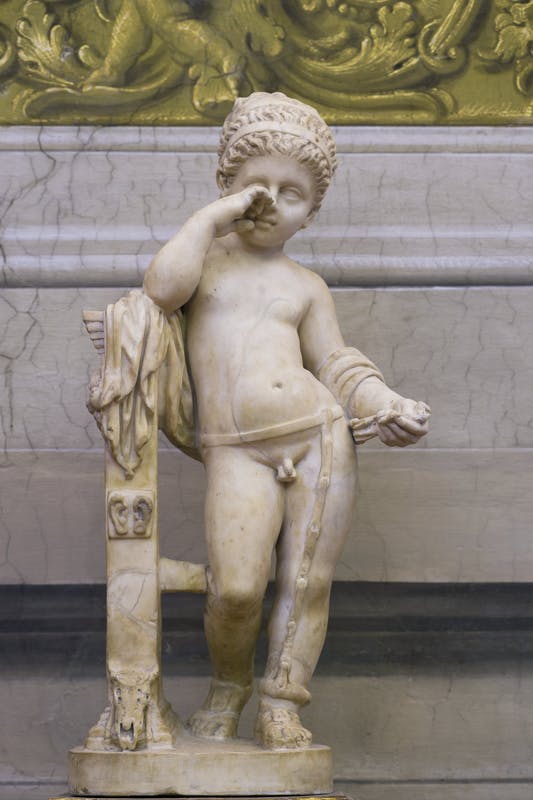 Cupid chained [Uffizi Gallery]